Pro Air Race Flight Simulator
- 2.6
- Rating
- 10.00K
- Installs
- Free
- Price
 Analysis by App-foxy
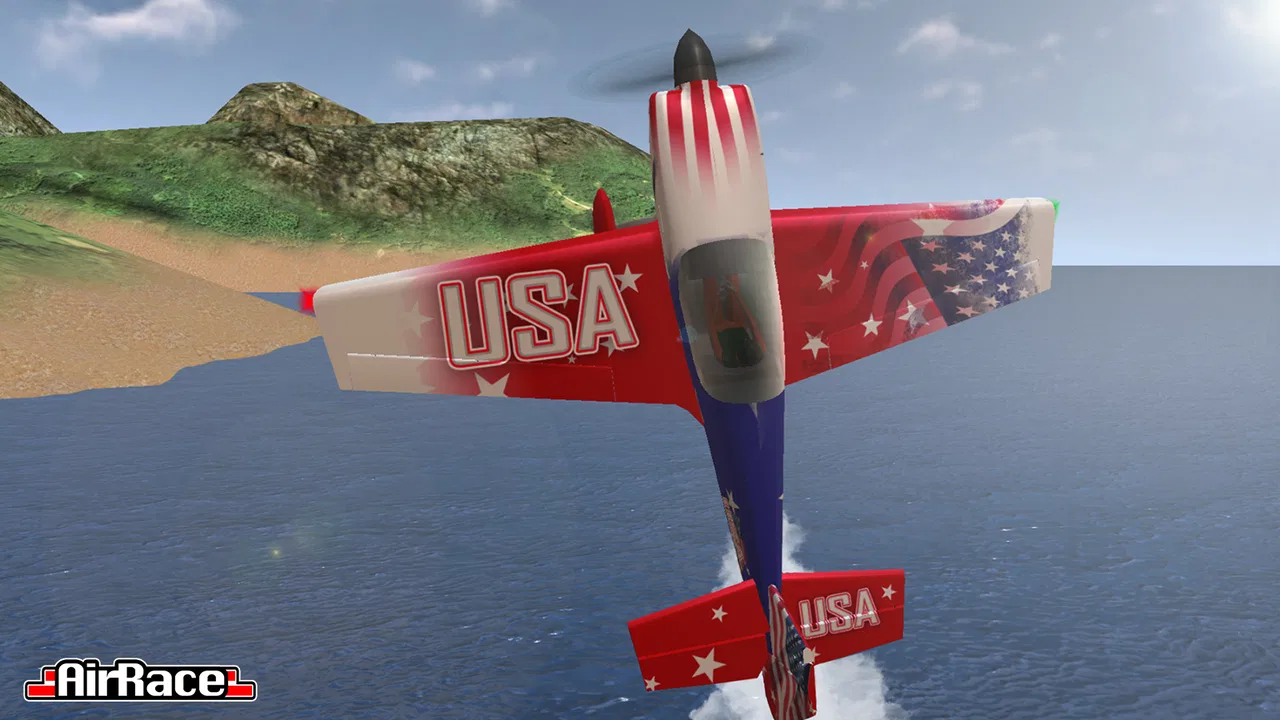
Pro Air Race Flight Simulator is a free racing game from Pro Simulators Online that focuses on a very specific kind of speed: flying through an air-race course rather than driving around a conventional track. I approached it expecting a quick mobile diversion, and that is where it makes the most sense. The central appeal is the feeling of steering an aircraft through a fast route while trying to stay controlled, rather than simply holding an accelerator and watching scenery pass by.
The store summary calls the experience addictive, but my reaction is more measured. The game can be enjoyable in short sessions when I want something different from a car racer, especially because the aerial setting changes how I think about corners, height, and positioning. At the same time, its modest average rating of 2.6 from around 130 ratings suggests that it will not satisfy everyone. I would treat it as a lightweight experiment for fans of flight-themed racing, not as a replacement for a deep aviation simulator.
Why the aerial racing focus matters
The most important capability here is the combination of flight control and racing pressure. In a normal racing game, the route is mostly laid out on a flat surface, and mistakes usually mean braking too late, hitting a barrier, or losing the ideal line. In this game, the same basic idea is moved into the air. That makes every turn feel less predictable because the player is managing direction in a three-dimensional space.
You May Also Like

 AccuWeather: Weather Radar
AccuWeather Review: A Quick, Clear Forecast for Everyday Decisions
For everyday plans, the best forecast is the one you can understand quickly. AccuWeather makes rain timing, radar, and local conditions easy to act on, with a few trade-offs.

 Hill Climb Racing
Why Hill Climb Racing Still Turns Crashes Into One More Run
A tiny car, a bumpy hill and one more upgrade: Hill Climb Racing keeps resurfacing because its simple chaos makes every near-miss feel personal.

 AliExpress - Shopping App
AliExpress Makes Global Shopping Feel Personal, but Shoppers Bear the Risk
AliExpress turns a global marketplace into a pocket-sized discovery engine. Its reach is useful, its shopping loop compelling, and its trade-offs easy to miss.

 Lords Mobile: Kingdom Wars
Lords Mobile Is a Kingdom-Building Routine, Not a Quick Match
A case-by-case verdict on the building, battles, device demands, and social commitments that make Lords Mobile rewarding for some players and exhausting for others.

 PDF Scanner app - TapScanner
TapScanner Makes Paperwork Easier to Capture, Check, and Share
TapScanner makes scanning with a phone feel less like a rescue operation and more like a dependable step in getting work done. Its capture tools are useful, though not flawless.

 Block Blast!
 Shows How Much a Puzzle Game Can Leave Out
A quiet grid game shows why puzzle players increasingly value instant clarity, repeatable skill and low-pressure play—and where the genre still needs to catch up.
More From Our News Desk
View All News


That difference has a practical effect on the way I play. I cannot rely only on the instinct I developed from car games. I have to look ahead, anticipate the next change in direction, and avoid making a large correction at the last second. A small adjustment made early is usually easier to manage than a dramatic movement when the aircraft is already approaching a gate or turn. Even without the complexity of a full simulator, the air-race format gives the game a distinct identity.
I also found that the aerial viewpoint changes what counts as a mistake. In a ground racer, I can often recover by steering back toward the road. In the sky, losing the correct line can cost more because the surrounding space offers fewer obvious visual boundaries. That creates a useful tension: the course may look open, but the safest path is still narrow if I want to keep a good rhythm.
The real strength is not realism for its own sake; it is the way flying makes ordinary racing decisions feel less familiar. This is why I would recommend trying it even if you have already played plenty of mobile driving games. It gives the same broad objective—move quickly through a route—but asks me to judge movement from a different perspective.
Learning the controls without rushing
My first useful tip is to spend the opening attempts learning the response of the aircraft instead of immediately chasing the fastest possible run. The temptation is to push every movement as hard as possible, but that makes it difficult to tell whether a failure came from poor timing, excessive steering, or simply approaching a section too quickly. A calmer first pass gives me a reference point for later attempts.
I prefer to divide a course mentally into small sections. Rather than thinking about the entire race, I identify the next turn, the next opening, and the point where I need to begin correcting my direction. This workflow is especially helpful on a phone, where the screen gives me less room for visual information than a larger display. It also prevents one mistake from turning into a chain of hurried movements.
Another practical habit is to avoid constant overcorrection. When I repeatedly swing from one direction to the other, I lose the smooth line that makes the aircraft easier to control. A gentler sequence of movements usually gives me more time to see what is coming. This is not a hidden setting or a special technique built into the game; it is simply the best way I found to make the aerial racing concept manageable.
Players who are used to arcade racers may need a few attempts before the controls feel natural. That learning curve is not necessarily a flaw, but it does mean the game is less immediately comfortable than a basic car racer. If you want a game that feels effortless from the first tap, this may be the wrong choice. If you enjoy improving through repeated short runs, the control challenge is more appealing.
What a typical session feels like
A realistic use case is a short break while waiting for an appointment or commuting as a passenger. I can start a run, focus on one section, and stop without needing to commit to a long campaign. That makes the game easier to fit into spare moments than a more demanding flight title that expects extended concentration or a lengthy progression session.
In that situation, I would not judge success only by whether I finish quickly. I would use each attempt to answer one practical question: did I begin the turn early enough, did I make a correction too sharply, or did I lose control because I was looking too far ahead? This approach gives the repeated runs a purpose. Without it, the experience can become a cycle of restarting without feeling that I am learning anything.
The game is also a better fit for players who like the idea of flight but do not want a technical aviation lesson. I can approach it as a racing game with aircraft rather than worrying about real-world procedures. That keeps the entry barrier lower than a serious simulator, while still offering more novelty than a standard track-based title.
However, the same simplicity may disappoint experienced flight fans. Anyone looking for detailed aircraft behavior, extensive simulation systems, or a realistic training environment should look toward a dedicated flight simulator instead. Pro Air Race Flight Simulator is built around the excitement of the race, not the complete discipline of piloting an aircraft.
Where it compares well with ordinary racing games
Compared with a typical mobile car racer, this game has a clearer single idea. It does not need to compete through a large collection of vehicles or elaborate customization to be interesting. Its value comes from taking a familiar racing goal into the air. For someone tired of asphalt tracks, that change alone can make a short session feel fresh.
The trade-off is that a car racer often communicates its rules more clearly. Roads, barriers, and lane markings naturally tell me where I should go. An aerial course can feel more open, so I need to pay closer attention to the route and my position. This makes the game more distinctive, but also less forgiving when the visual information is not immediately clear.
It also differs from endless-runner racing games. Those titles often reward quick reactions above all else, while this one benefits from anticipation. I get more value from looking at the upcoming path and preparing my movement than from reacting only when an obstacle is already close. Players who enjoy planning a clean line may prefer this approach; players who want instant, uncomplicated action may find it slower to master.
Against a full flight simulator, the comparison goes in the opposite direction. The air-race game is easier to pick up and better suited to casual play, but it cannot offer the same depth that serious simulation fans expect. I would choose this title when I want a focused flying race, and a specialist simulator when I want to study aircraft handling or spend a longer session exploring a detailed cockpit experience.
The main trade-offs before installing
The first limitation is the modest reception visible in its average rating. A 2.6 average is not a reason to dismiss the game automatically, but it is a useful warning to keep expectations realistic. I would not install it assuming that the experience will feel polished in the same way as a major racing release. The best approach is to see whether the central flying mechanic appeals to me before investing time or money.
There is also a difference between being free to install and being completely free of spending pressure. The game is free, while optional in-app purchases range from $0.99 to $14.99 per item. That matters if I am looking for a racing game with no possible financial friction. I would keep purchases separate from the reason for downloading it: first decide whether the basic air-racing loop is enjoyable, then consider whether any optional purchase genuinely improves the experience for my own habits.
Because the game is designed for Everyone, it is accessible to a broad audience from an age-rating perspective. That does not mean every player will enjoy its controls. Younger or less experienced players may still need time to understand the three-dimensional movement, while adults who expect realistic simulation may find the experience too light. The age rating tells me who can use it, not who will find it satisfying.
The listed minimum operating system is Android 7.1, so compatibility is relatively broad for users with older supported devices. Even so, I would still pay attention to how comfortably the game runs on a particular phone. Racing depends on timing, and any control or performance issue that makes movement feel delayed can be more noticeable here than in a turn-based game. A device that handles fast visual motion comfortably will provide a better experience.
The current version is 25.12.26, which is useful when checking whether the installed copy matches the latest version available through the relevant store. I would also remember that version numbers alone do not tell me how well the game will suit my phone or my expectations. The important test is whether the aircraft responds consistently enough for me to learn from each attempt.
Three ways to get more from each attempt
First, I would use the earliest runs as observation sessions. Instead of treating every failed attempt as wasted, I would watch where the route begins to demand a change in direction. The goal is to identify the moment before the turn, not merely the turn itself. This makes later attempts more deliberate and reduces the habit of reacting too late.
Second, I would prioritize a stable line over dramatic speed. In an aerial race, a fast but messy movement can leave me badly positioned for the next section. A slightly slower approach that preserves control may produce a better overall run. This is a subtle trade-off that is easy to miss if I judge every moment by speed alone.
Third, I would stop after a few frustrating attempts and return later rather than forcing endless restarts. Short-session games can become surprisingly tiring when I repeat the same mistake without changing my approach. A break helps me return with a clearer view of the route. This is particularly useful for a game whose main challenge is precision rather than a large amount of content.
These habits do not transform it into a complex simulator, but they make the existing racing idea more rewarding. They also help me decide fairly whether I dislike the game itself or simply have not yet adjusted to its aerial control style.
Who should choose it
I think the strongest audience is someone who wants a free, flight-themed racing game for brief sessions and enjoys learning a control pattern through repetition. It is a sensible choice for a player who has grown tired of conventional car tracks but does not want the commitment of a serious flight simulation. The aircraft setting gives the game a clear reason to exist, and that is enough to make it worth a cautious try.
It is less suitable for anyone searching for a broad racing package with deep progression, extensive realism, or the refined presentation associated with premium alternatives. I would also advise skipping it if the average rating makes you uncomfortable with trying an uneven experience, or if you strongly prefer racing games where the route is immediately obvious.
The developer, Pro Simulators Online, has positioned this as an air-race flight simulator rather than a general-purpose aviation game. That distinction is important. I would not download it to practice real piloting, and I would not compare it only with professional simulation software. Its fair comparison is with casual mobile racers that use an unusual theme to create a different kind of short challenge.
With over ten thousand installs, it has reached a modest audience, but I would not treat that figure as proof of quality or a reason to avoid it. The more useful question is whether I enjoy controlling an aircraft through a racing route. If that idea sounds appealing, the free entry makes experimentation easy. If I want a highly polished or deeply realistic experience, I would spend my time with another option.
My final recommendation
After looking at the way the aerial racing mechanic shapes play, I see Pro Air Race Flight Simulator as a niche casual racer with a worthwhile premise and clear limitations. I like that it asks me to think about direction and timing differently from a car game, and I appreciate that a short session can still give me a small goal to improve. The experience is most enjoyable when I approach it as a focused flying challenge rather than expecting a complete simulator.
I would recommend trying it if you are curious about air racing, want something free for occasional sessions, and are comfortable giving the controls time to settle. I would skip it in favor of a more established racing or flight title if you need consistently polished handling, deep systems, or a large amount of content. In simple terms, this is a game worth testing for its specific idea, but not one I would recommend blindly to every racing fan.
My advice is to install it with modest expectations, learn the route before chasing speed, and decide based on whether the aerial control itself feels satisfying. That is where the game either works for you or does not. For the right player, its unusual setting can make a familiar racing format feel fresh; for everyone else, the trade-offs will become apparent quickly.
FAQs for Pro Air Race Flight Simulator
01What is Pro Air Race Flight Simulator?
Pro Air Race Flight Simulator is an aviation racing game focused on flying small aircraft through challenging courses at high speed. After testing it, the main appeal is its combination of time-based races, aerial obstacles, and simulator-style controls. It is designed for players who enjoy competitive flight gameplay rather than a traditional airline or open-world aviation simulator.
02How does the gameplay and control system work?
The game generally uses touch controls to steer the aircraft, adjust its movement, and navigate through checkpoints during each race. New players may need several attempts to become comfortable with the sensitivity, especially when making sharp turns at high speed. Learning to maintain a stable flight path is important, because aggressive movements can make it harder to complete courses quickly and accurately.
03Can Pro Air Race Flight Simulator be played offline?
Pro Air Race Flight Simulator may be suitable for short offline sessions, but availability of specific features can depend on the installed version and device configuration. Basic racing gameplay is usually the most accessible without an internet connection, while advertisements, updates, leaderboards, or other online-related elements may require connectivity. It is worth checking the store listing before downloading if offline play is essential.
04Is Pro Air Race Flight Simulator free to download?
The game is typically offered as a free download, although free access may include advertising or optional in-app purchases, depending on the platform and version. Before installing, users should review the current store information for pricing, purchase details, and permissions. Players who dislike frequent advertisements should also consider that the free version may not provide the same experience as a paid or ad-free alternative.
05What devices are recommended for playing the game?
A relatively recent Android or iOS device is recommended for a smoother experience, particularly when the game includes detailed aircraft models, animated environments, or demanding visual effects. Older phones and tablets may still run it, but performance can vary through lower frame rates, longer loading times, or reduced graphics quality. Keeping enough free storage and closing background apps can also help improve gameplay.
Pros
- Realistic flight physics make each race feel challenging and rewarding.
- Multiple aircraft provide variety in handling and racing strategy.
- Short events are convenient for quick gaming sessions.
- Responsive controls work well with both tilt and touch input.
- Progression encourages players to improve times and master difficult courses.
Cons
- Steep learning curve may frustrate players unfamiliar with flight simulators.
- Some races require repeated attempts to achieve competitive results.
- Visual quality can vary depending on the device and graphics settings.
- Limited content may reduce long-term appeal for dedicated racing fans.
- In-app purchases may be needed to unlock certain aircraft or upgrades faster.

Pro Air Race Flight Simulator
Gallery